Netflix vs. Disney+: Do You Need Both in 2026?
Publishing date: Jul 28, 2026
Update date: Aug 8, 2026
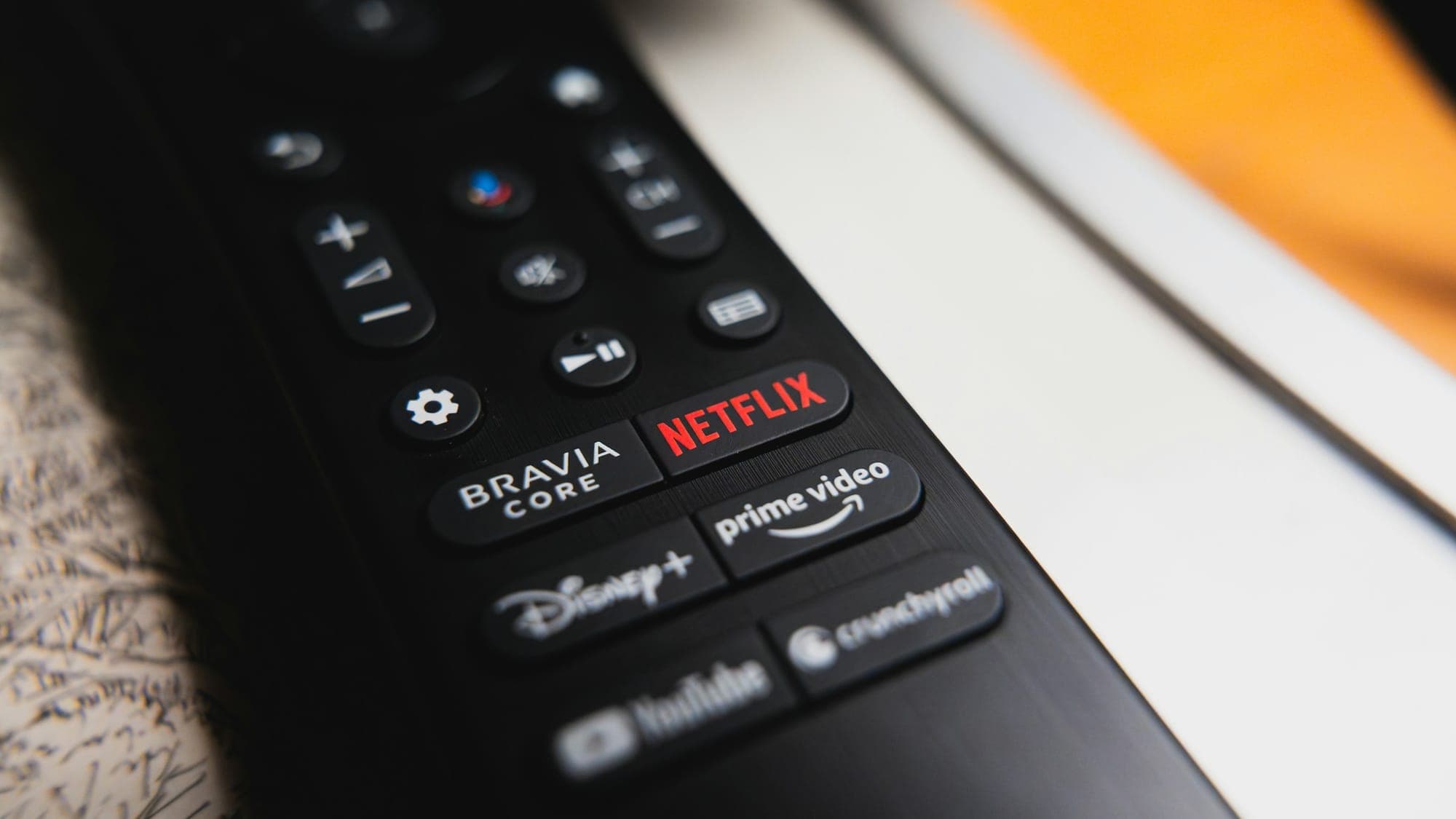
Photo by Anthony Gomez on Unsplash
If you're trying to decide between Netflix and Disney+, or wondering whether you need both, the short answer is that it depends less on which service is "better" and more on who's watching. They barely compete for the same content, which is exactly why so many households end up paying for both without ever really deciding to.
Here's what each one costs right now, what the math looks like once you add them together, and a real way to decide instead of defaulting to "just keep both."
What Netflix and Disney+ each cover
Netflix is the general-interest option: a huge, constantly rotating library of originals paired with licensed shows and movies across every genre, aimed at adults who want variety. Disney+ is narrower on purpose. It's built around Disney, Pixar, Marvel, Star Wars, and National Geographic, plus a deep well of kids' and family programming. There's very little overlap between the two streaming services, which is the reason "just pick one" doesn't work for a lot of households the way it does with, for example, two general entertainment streaming options like Youtube TV and Hulu + Live TV.
That narrowness is also Disney+'s biggest weakness if nobody in your house cares about its specific franchises. A household with no kids and no particular attachment to Marvel or Star Wars can go months without opening the app, even while paying for it every month.
What each one costs in 2026
Netflix raised prices across all three tiers earlier this year. Disney+ last raised its own prices in October 2025. Here's where both currently stand:
| Plan | Monthly | Notes |
|---|---|---|
| Netflix Standard with Ads | $8.99 | 1080p, 2 simultaneous streams |
| Netflix Standard | $19.99 | Ad-free, 1080p, 2 simultaneous streams |
| Netflix Premium | $26.99 | Ad-free, 4K/HDR, 4 simultaneous streams |
| Disney+ Basic (with ads) | $11.99 | Ads on select live and linear content |
| Disney+ Premium (no ads) | $18.99 | Also available at $189.99 billed annually |
Netflix's cheapest tier is a few dollars cheaper than Disney+'s cheapest tier, but on the ad-free plans the two are close: Disney+ at $18.99 runs about a dollar less than Netflix's $19.99 Standard tier. If price is your main filter and you can live with ads, Netflix's $8.99 tier is the lowest entry point of the five standalone options. However if your household needs more than 2 screens, Disney+ Premium is meaningfully cheaper than Netflix Premium.
What both together costs
Add the cheapest tier of each and you're at $8.99 + $11.99, or $20.98 a month for both services with ads. Go fully ad-free on both and it's $19.99 + $18.99, or $38.98 a month. That's a real gap, nearly double, just from deciding how much ad tolerance your household has.
Most guides stop at "get both, it's worth it," without putting a number on what "both" means. $21 a month for two ad-supported services is a very different decision than $39 a month for two ad-free ones, and which end of that range you land on should be a deliberate choice, not a default.
Does the Disney+/Hulu bundle save you money?
Disney sells Disney+ bundled with Hulu, and it's a good idea to compare that against paying for Disney+ alone before you assume it's the better deal. The bundle runs $12.99 a month with ads or $19.99 a month ad-free (after a limited-time introductory rate for new subscribers). Compare that to standalone Disney+ at $11.99 with ads or $18.99 ad-free, and the bundle costs about a dollar more each month either way.
That dollar buys you all of Hulu's library on top of Disney+. If anyone in your household would watch Hulu, the bundle is close to free once you account for what a standalone Hulu subscription would otherwise cost. If nobody would, you're better off skipping it and keeping the plain Disney+ plan, since a dollar a month you never use is still money you didn't need to spend.
So do you need both?
A few household patterns make the "keep both" case pretty clearly:
There are kids in the house, or someone is a genuine Marvel, Star Wars, or Pixar fan. Disney+'s narrow catalog stops being a weakness the moment it's the exact catalog someone in your house wants, and there's no real substitute for it on Netflix. If kids' programming is the deciding factor, our guide on whether you need more than one streaming service for kids walks through that question on its own. We've done the same single-genre breakdown for anime and true crime.
Oppositely, if the household also wants a broad, constantly-refreshed general library for the rest of the time, then that's Netflix's job, and it's not one Disney+ is trying to do.
If nobody watches Disney, Pixar, Marvel, or Star Wars content regularly, Disney+ becomes a subscription you're paying for out of habit rather than use, and canceling it is the higher-value move over keeping both "just in case." The same logic runs in reverse for a household that's almost entirely Disney-franchise viewers with little interest in Netflix's broader catalog, though that's the less common case.
The middle ground worth considering: rotate instead of paying for both year-round
Both services bill month to month, so "keep paying for both, forever" isn't the only option. A household that leans heavily toward one service can subscribe to the other only when there's something specific to watch, a new season, a franchise release, a holiday binge, and pause or cancel in between. Disney+ especially lends itself to this: a lot of its viewing clusters around specific release windows (a new Marvel or Star Wars series, the holiday season for family movies) rather than being an everyday habit the way Netflix tends to be. Our full pause vs. cancel breakdown has the complete rundown of how long each service's pause window lasts and when a straight cancel makes more sense instead.
This is exactly the kind of decision Stream Engine Planner is built to help with: not just picking one service over another, but figuring out where a subscription like Disney+ fits against everything else you're already paying for, including whether it makes more sense as a year-round subscription or a rotate-in-when-needed one. Run your free optimization and it'll factor a seasonal or rotating subscription into your full household picture instead of treating it as an all-or-nothing choice.
Making your decision
If your household uses both libraries, ad-supported Netflix and ad-supported Disney+ together at just under $21 a month is a reasonable, deliberate cost for covering most of what a household wants to watch. If you're not sure Disney+ earns its keep, the rotate-it-in approach costs nothing extra and removes the guesswork.
Before adding or keeping either subscription on autopilot, check it against everything else on your streaming bill. That's what a free Stream Engine Planner report does automatically: it weighs a subscription like Netflix or Disney+ against all of your streaming subscriptions and lays out an action plan for keeping the ones worth it and cutting the ones that aren't. Run your free optimization and see exactly where these two fit into your whole household bill.
Frequently asked questions
Is Disney+ worth it if I don't have kids?
Only if someone in the household actively watches Marvel, Star Wars, Pixar, or National Geographic content. Without that, Disney+'s narrow catalog gives an adult-only, non-franchise household little reason to keep paying for it year-round.
Does the Disney+/Hulu bundle include ESPN?
Not by default. Disney also sells a separate bundle that adds ESPN's streaming service on top of Disney+ and Hulu, at a higher price than the two-service bundle, so it's a different purchase decision than the plain Disney+/Hulu combination covered here.
Can I switch between Netflix's ad-supported and ad-free tiers whenever I want?
Yes. Netflix lets you change plans at any time from your account settings, without canceling and resubscribing. Moving up to a pricier ad-free tier takes effect right away, with a prorated charge for the switch. Moving back down to the ad-supported tier takes effect on your next billing date instead, so you keep the ad-free plan's features until then.
Is it cheaper to get Disney+ standalone or through the Hulu bundle?
Standalone Disney+ is about a dollar a month cheaper than the Disney+/Hulu bundle at either ad tier. The bundle is the better value only if you'd watch Hulu's library too, not if Disney+ alone is all you want.